Guest Insights
Context
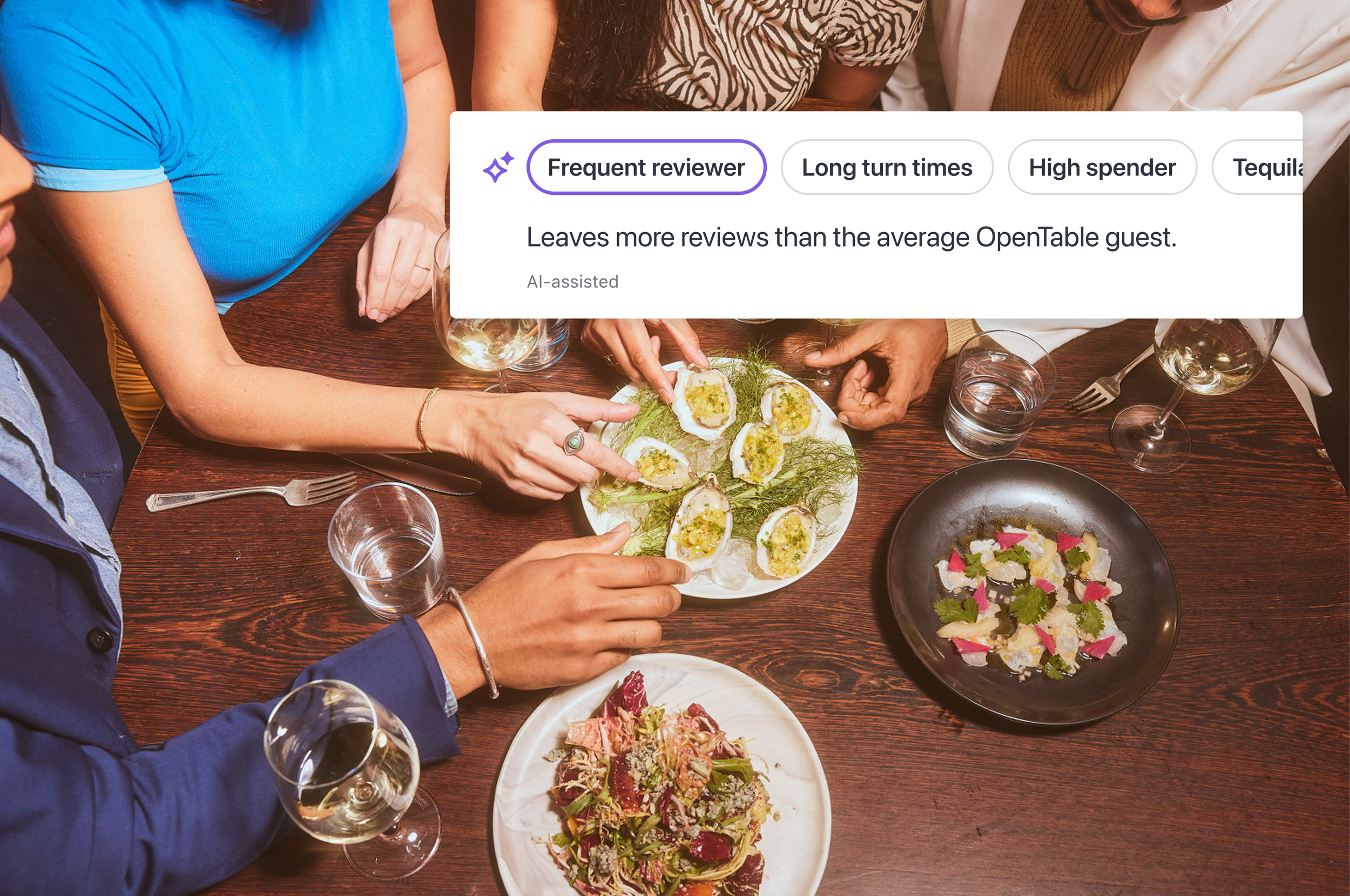
As OpenTable began investing in AI, we saw an opportunity to help restaurants better understand their guests before they arrived.
OpenTable had over 26 years of diner behavior across its network, yet 94% of guest profiles contained little or no meaningful information. Restaurants often relied on fragmented notes and multiple systems to personalize service.
Rather than collecting more data, we explored how AI could transform existing behavioral signals into trusted, actionable guest insights that fit seamlessly into restaurant workflows.
As one of OpenTable's first AI-powered initiatives, the project also established the interaction patterns and visual language that future AI experiences would build upon.
My role
Partnered with product, marketing and brand to define the vision and roadmap. Led research, concept development, and end-to-end product design across desktop, iOS and Android.
Team
1 Designer (me)
1 Product Manager
1 Product Marketing Manager
10+ Engineers
Discovery
What we knew
Information we learned from product and market data.
94%
of profiles had little to no information on guests.
36%
of restaurants expressed they would pay more for data.
69%
of restaurants use multiple systems to capture guest data.
Discovery
Untapped data potential
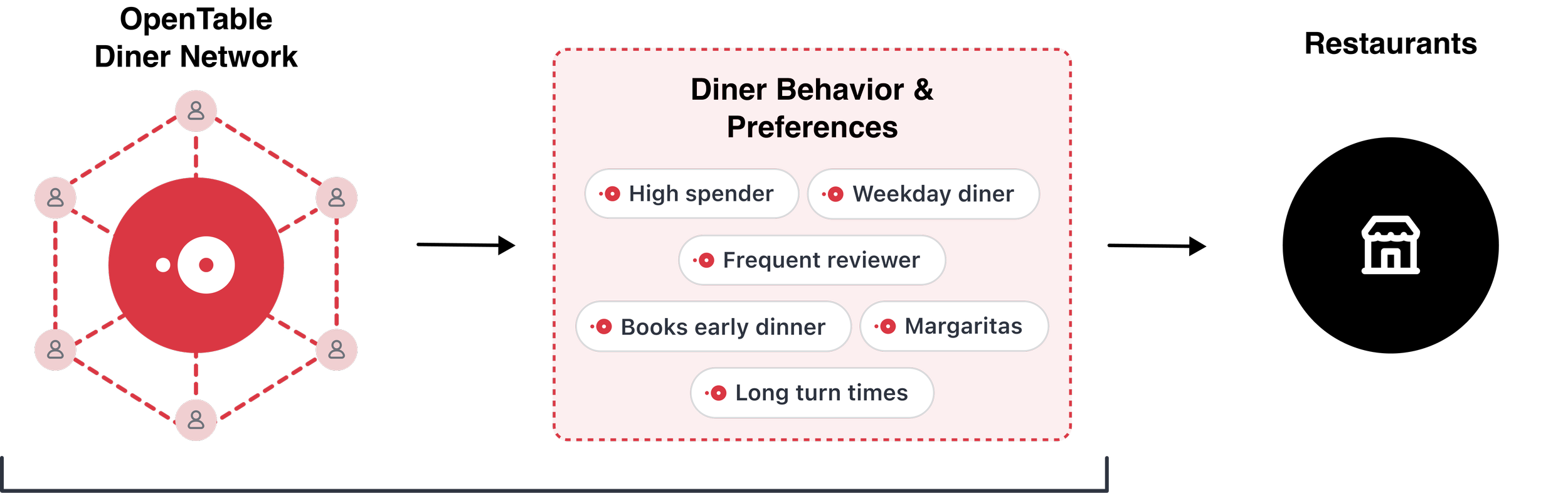
Upon learnings from collaboration with the Data Science team, OpenTable's existing diner network could infer 24 behavioral signals, revealing that the opportunity wasn't collecting more data—it was making existing data useful.
Discovery
Customer validation
Before expanding the rollout, we released Guest Insights to a beta group of restaurant operators and conducted two rounds of moderated usability interviews (10 participants each). Between rounds, we iterated on the experience based on feedback to validate our design decisions in real restaurant workflows.
Actionable over informational
Operators consistently preferred insights that helped them prepare for service rather than simply summarize guest history.
Trust through transparency
Operators wanted AI-generated insights to be clearly distinguishable from restaurant-entered notes to build confidence in the recommendations.
Fit existing workflows
Restaurants preferred Guest Insights embedded directly within the guest profile rather than introducing a separate destination.
Prioritizing quality over quantity
Design decision #1
Problem
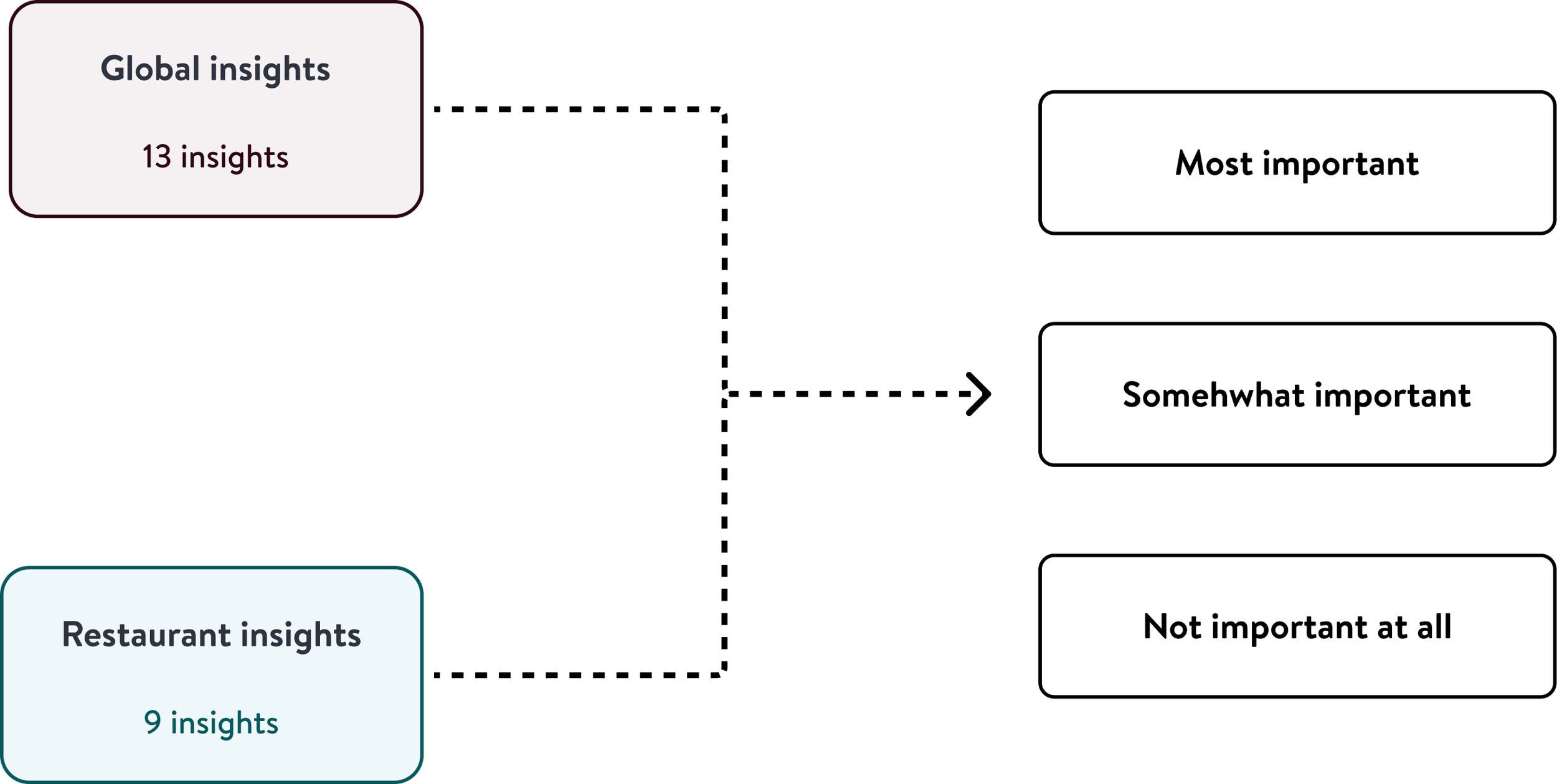
Working with Data Science uncovered 24 possible behavioral insights, but surfacing all of them would overwhelm restaurant operators and dilute the value of the feature.
Decision
I prioritized the insights that were immediately actionable during service rather than trying to expose everything AI could infer.
Outcome
Created a focused experience that helped operators make faster decisions without increasing cognitive load.
Embedding AI into existing workflows
Design decision #2
Problem
The guest profile is one of the most frequently used surfaces for front-of-house staff. Introducing AI risked increasing information density and disrupting established workflows.
Decision
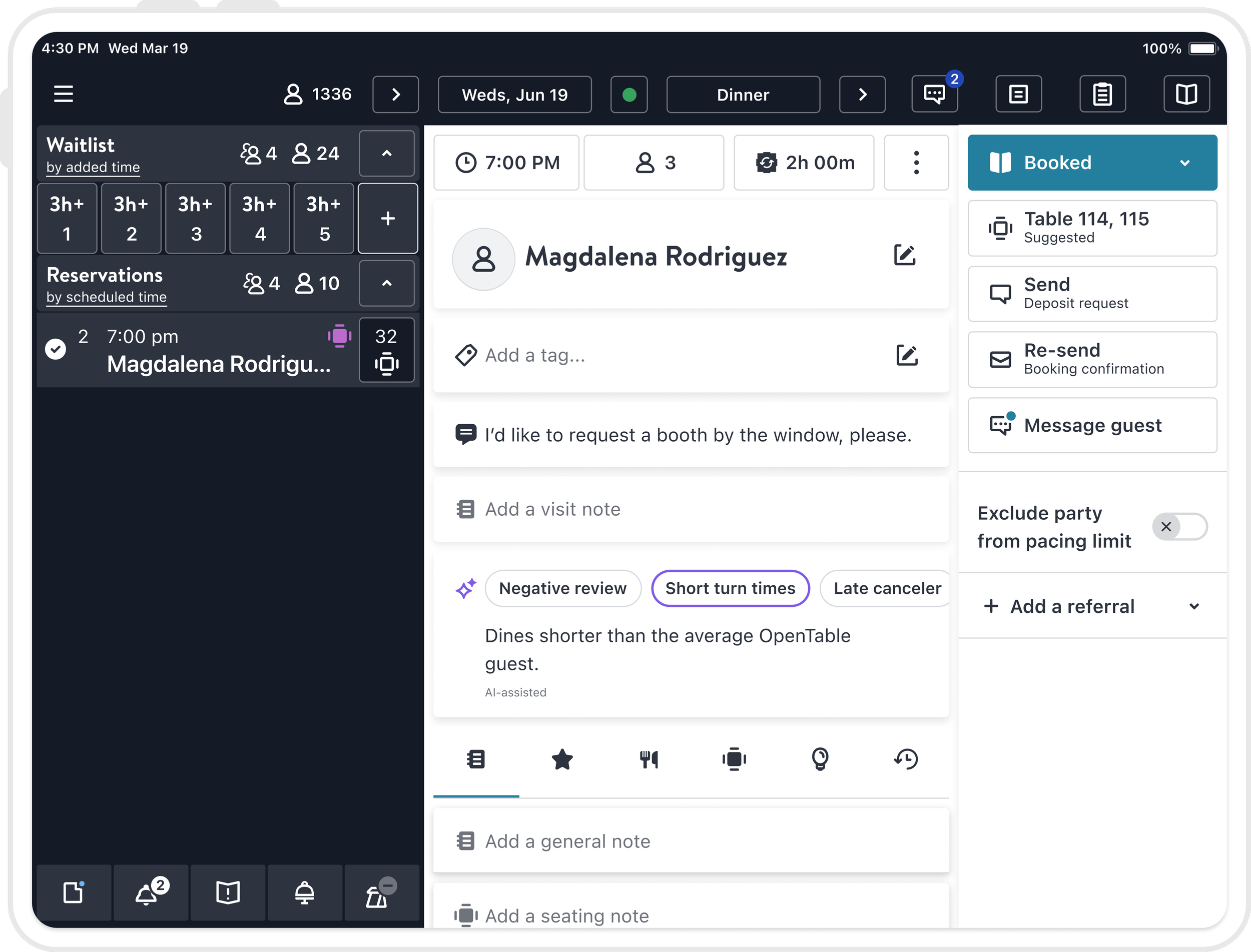
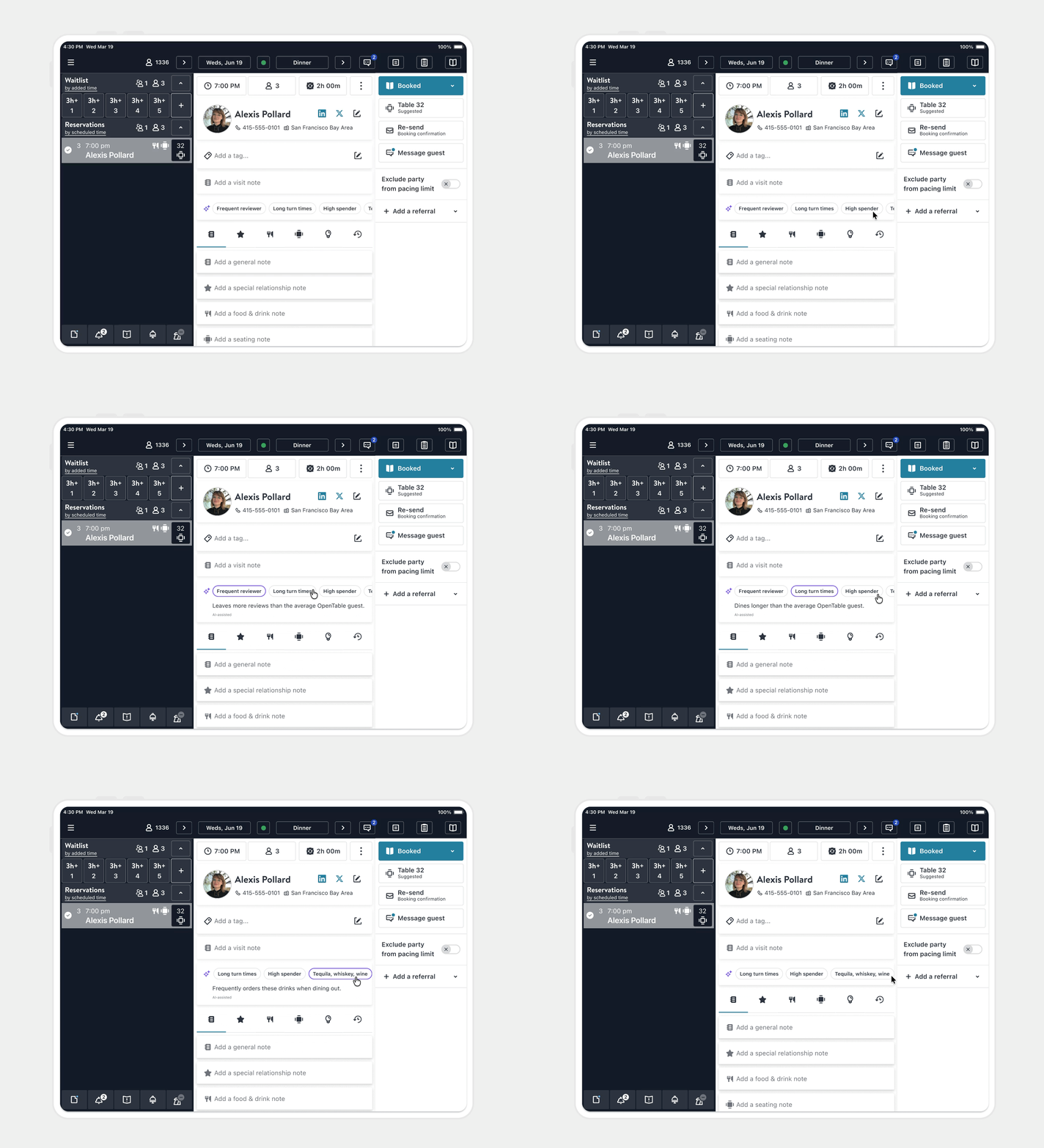
Rather than creating a separate AI destination, I integrated guest insights directly into the existing guest profile, surfacing them only where they added value.
Outcome
Restaurants gained richer context without changing how they prepared for guests.
Building trust in AI
Design decision #3
Problem
OpenTable had never introduced AI-generated information into the product. Without clear distinctions, restaurants could struggle to understand what was AI-generated versus manually entered.
Decision
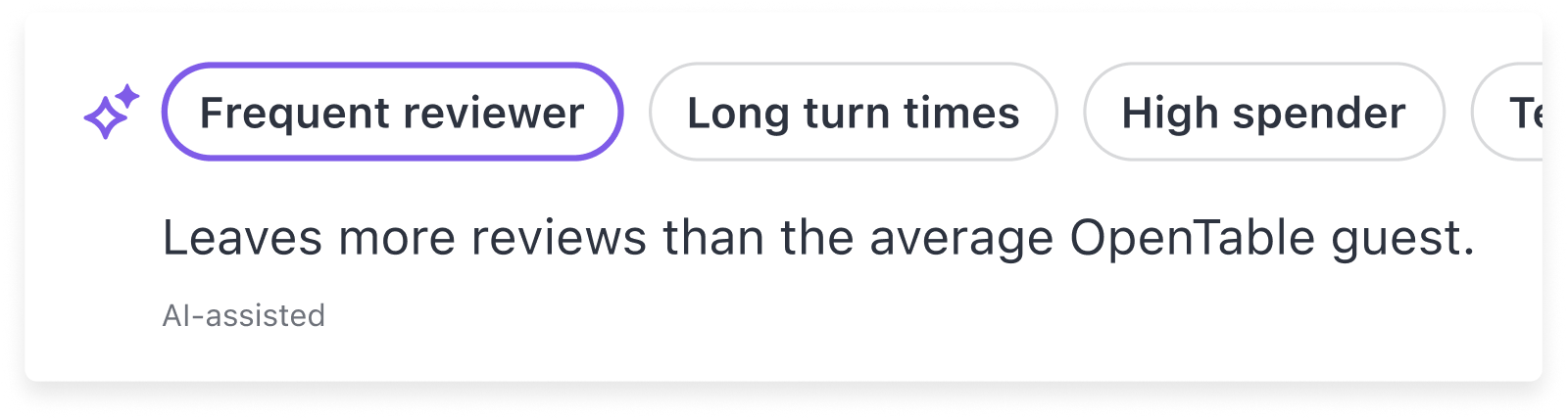
I established the visual language for AI—including labeling, hierarchy, and interaction patterns—to clearly differentiate AI-generated insights while maintaining confidence in the information.
Outcome
Established reusable AI interaction patterns that became the foundation for future AI experiences.
Final experience
The final experience surfaces AI-generated guest insights directly within the guest profile, helping operators prepare for guests without disrupting their existing workflow.
Impact
First AI-powered restaurant experience to go live
Established the foundation for AI within the restaurant platform.
Established reusable AI design language
Created the visual language and interaction patterns adopted by future AI features.
Validated customer value
Restaurants immediately began using Guest Insights to prepare for service.
What our customers are saying
“The drink insights have been so helpful for us. Given our extensive beverage options, including our significant wine program, it’s beneficial for us to see if guests generally prefer cocktails, wine or non-alcoholic beverages.”
— Jennifer, Current Customer“Really really appreciate seeing the low review score bubble pop up on our guest profile. That’s good, actionable info for our team. ”
— Matthew, Current CustomerOpenTable now provides us with resources to personalize service for our guests. We have information on who they are, what they like, dislike, special occasions, and that helps us to deliver the experience we strive to.
— Ralph, Current CustomerReflection
Designing one of OpenTable's first AI-powered experiences changed how I think about AI in product design. Early on, it became clear that the challenge wasn't generating more information—it was deciding what deserved a restaurant's attention. Every design decision, from prioritizing the most actionable insights to establishing a clear AI visual language, reinforced that trust and usability matter more than novelty. The project reminded me that introducing new technology isn't about showcasing what AI can do—it's about integrating it so naturally into existing workflows that it helps people make better decisions with confidence.