OpenTable x Visa
Context
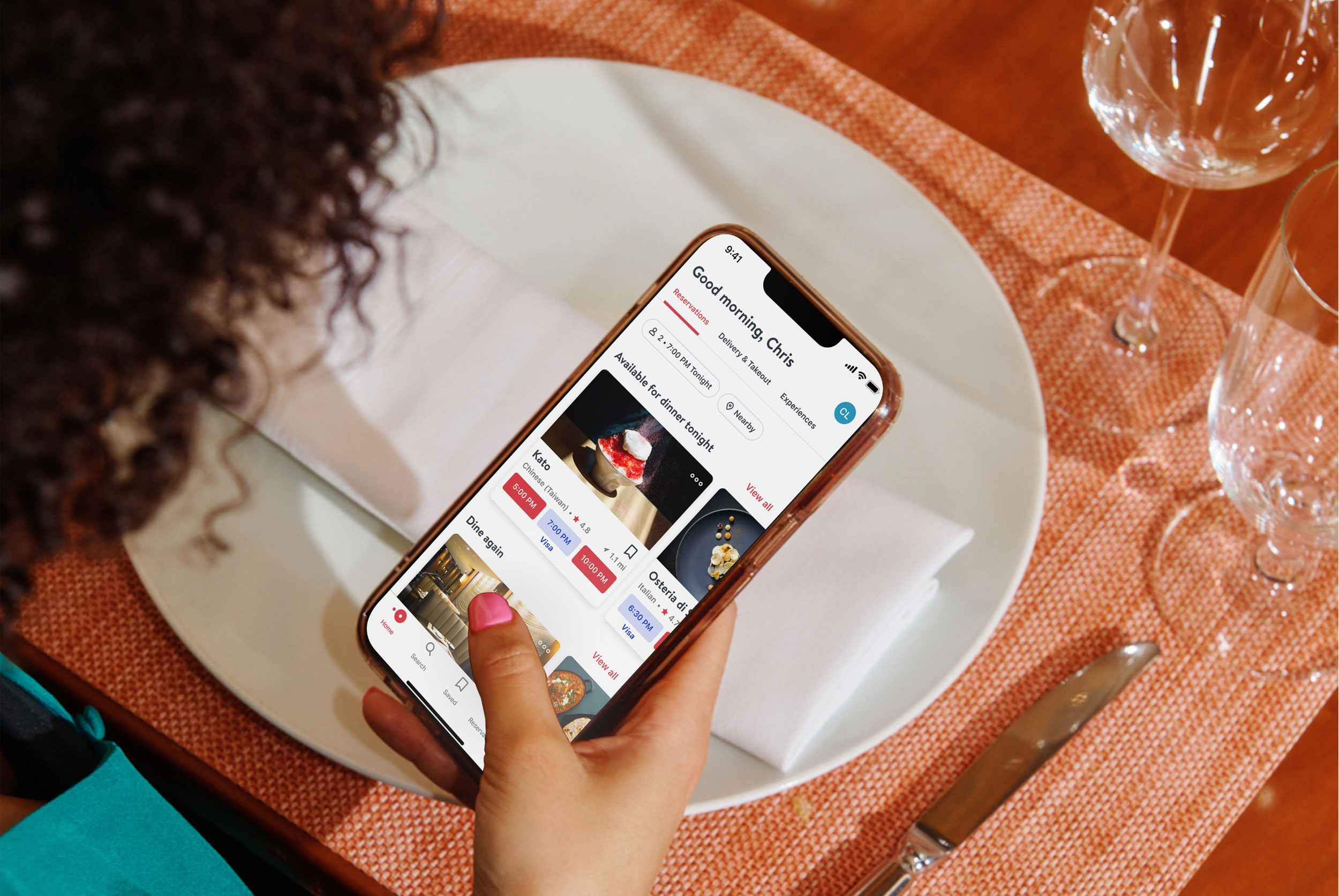
OpenTable was launching its largest strategic partnership to date with Visa. The partnership would allow eligible Visa Infinite and Visa Infinite Privilege cardholders to unlock exclusive reservations at premium restaurants.
This partnership represented a new business model for OpenTable, requiring entirely new product patterns that didn't yet exist.
As OpenTable's first enterprise-scale partnership, the project established the foundation for how strategic partners would be integrated into the product going forward.
My role
Partnered with product, marketing and brand to define the vision and roadmap. Led research, concept development, and end-to-end product design across desktop, iOS and Android.
Team
1 Designer (me)
1 Product Manager
1 Product Marketing Manager
10+ Engineers
Visa external team - Product Manager, Partnerships lead
Discovery
Quantitative discovery
Eligibility was limited to Visa Infinite cardholders
To understand who this experience needed to serve, I analyzed Visa eligibility data across OpenTable diners. Because the program was exclusive to Visa Infinite cardholders, roughly 80% of diners were ineligible for the benefit.
This shifted the design challenge from promoting exclusivity to building trust through transparency.
Discovery
Learning from previous smaller-scale partnerships
Before designing the experience, I met with cross-functional stakeholders who had worked on previous partnership launches to understand what succeeded, what didn't, and where opportunities existed.
Inconsistent experiences
Every partnership introduced new UI patterns, making them difficult for diners to recognize.
Unclear eligibility
Customers often didn't understand why certain benefits were unavailable to them.
No reusable framework
Customers often didn't understand why certain benefits were unavailable to them.
These recurring themes became the criteria I used to evaluate every design decision throughout the project.
Designing for everyone
Design decision #1
Problem
80% of diners weren’t eligible
Decision
Rather than hiding Visa inventory or promoting it aggressively, I surfaced the partnership in ways that educated diners while setting clear expectations.
Outcome
A seamless banner for both verified and unverified diners on Visa restaurants. No locked time slots for unverified diners.
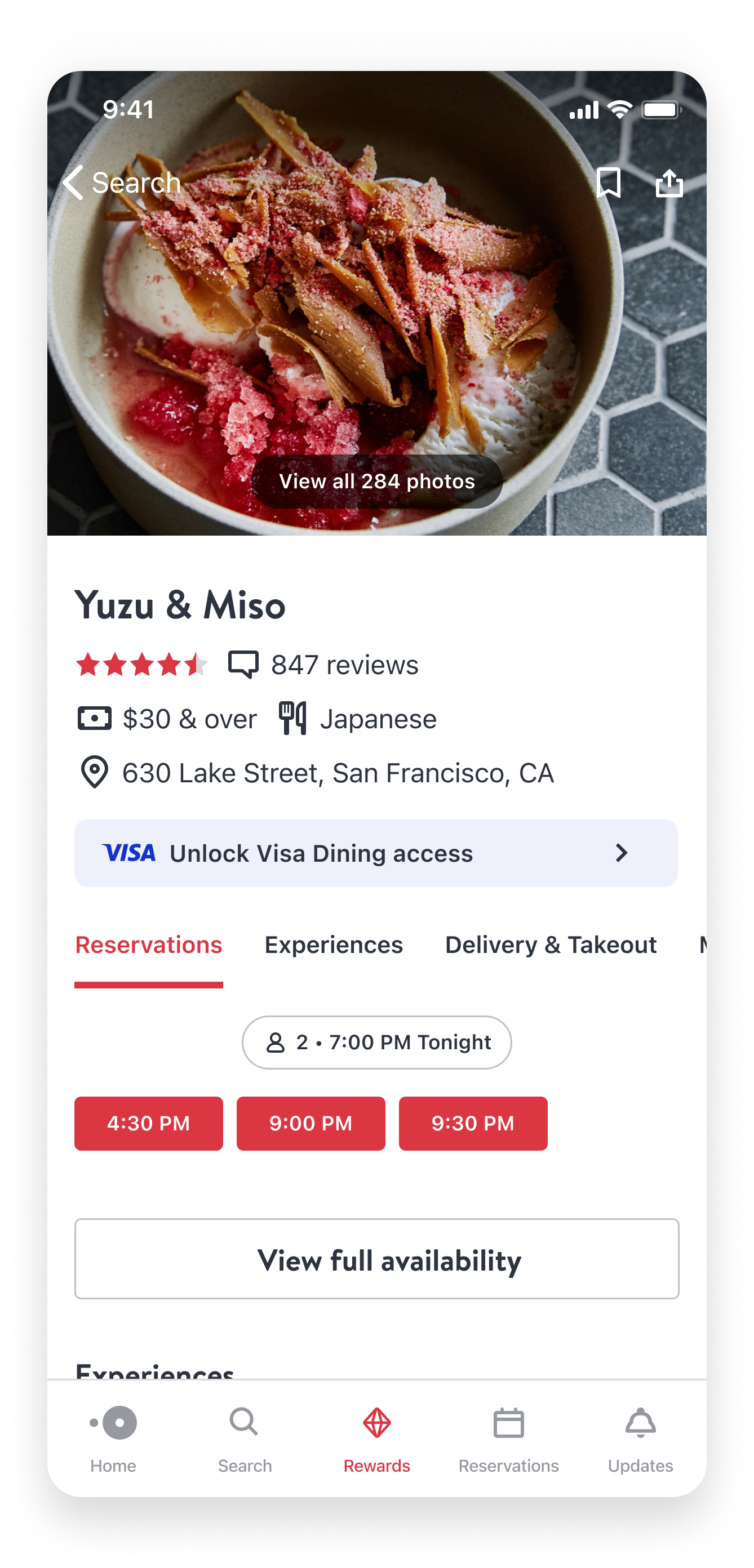
Restaurant profile - unverified
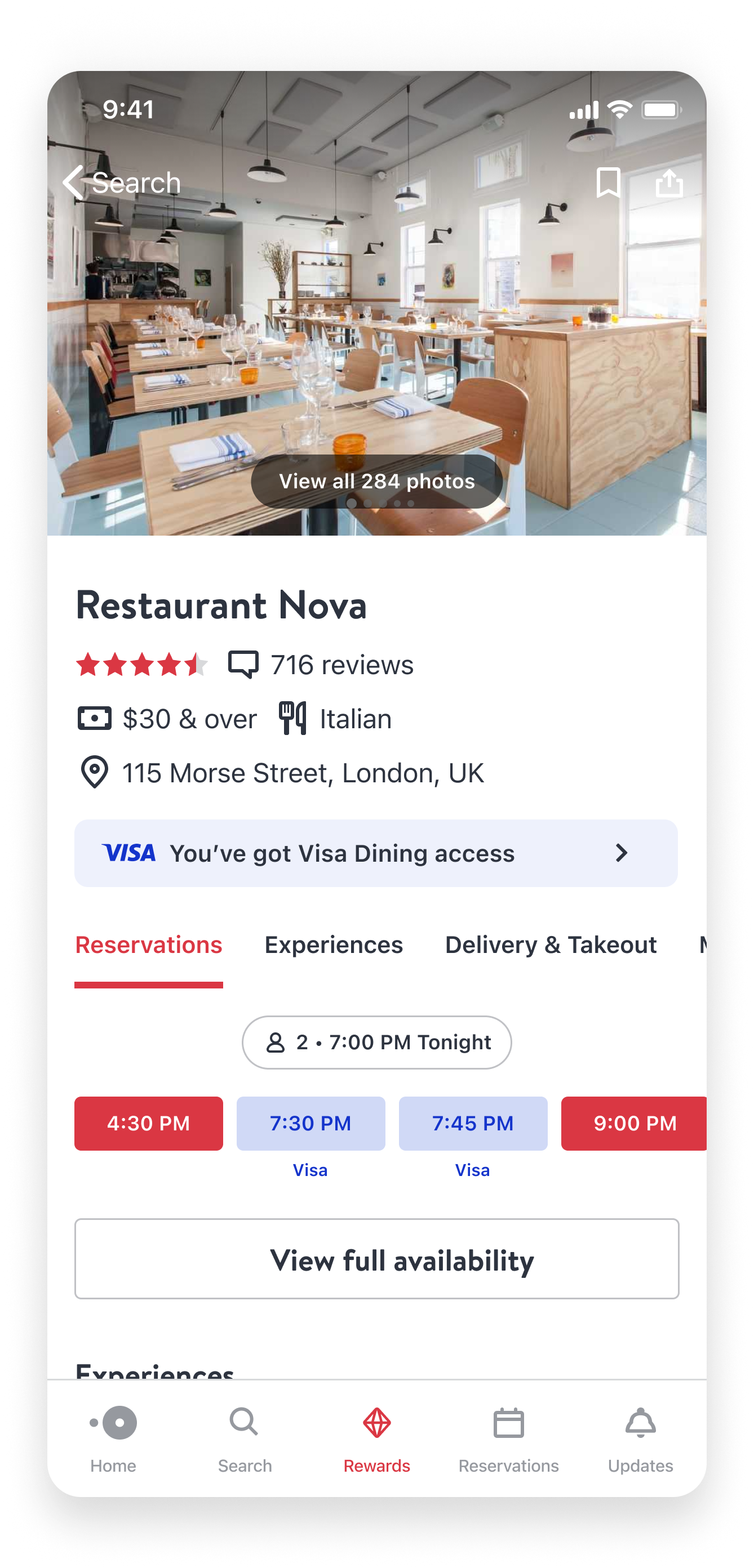
Restaurant profile - verified
Create a partnership language
Design decision #2
Problem
OpenTable had no established patterns for integrating partnerships into the product. Previous launches introduced one-off experiences, making them difficult for diners to recognize and costly to recreate.
Decision
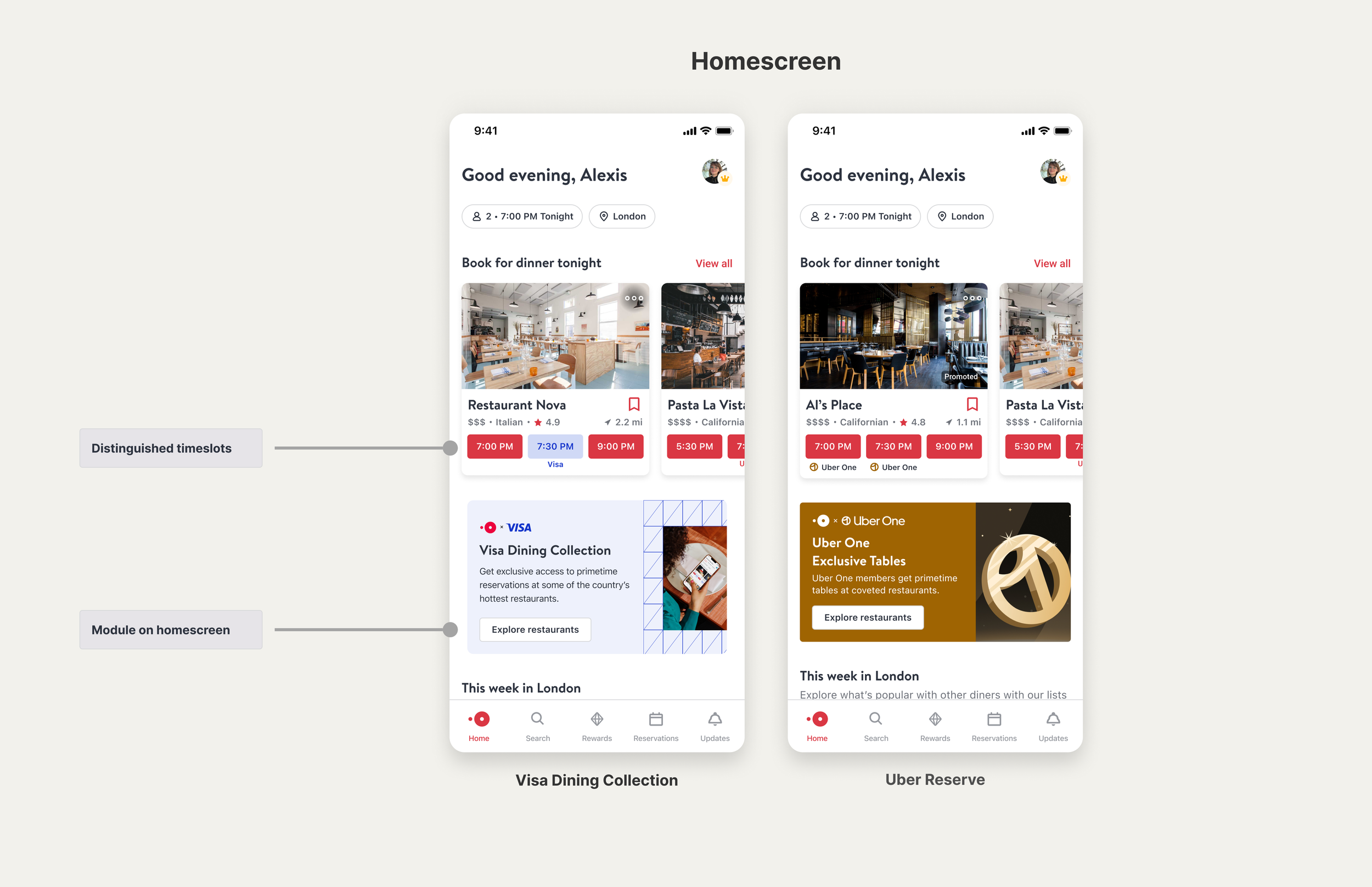
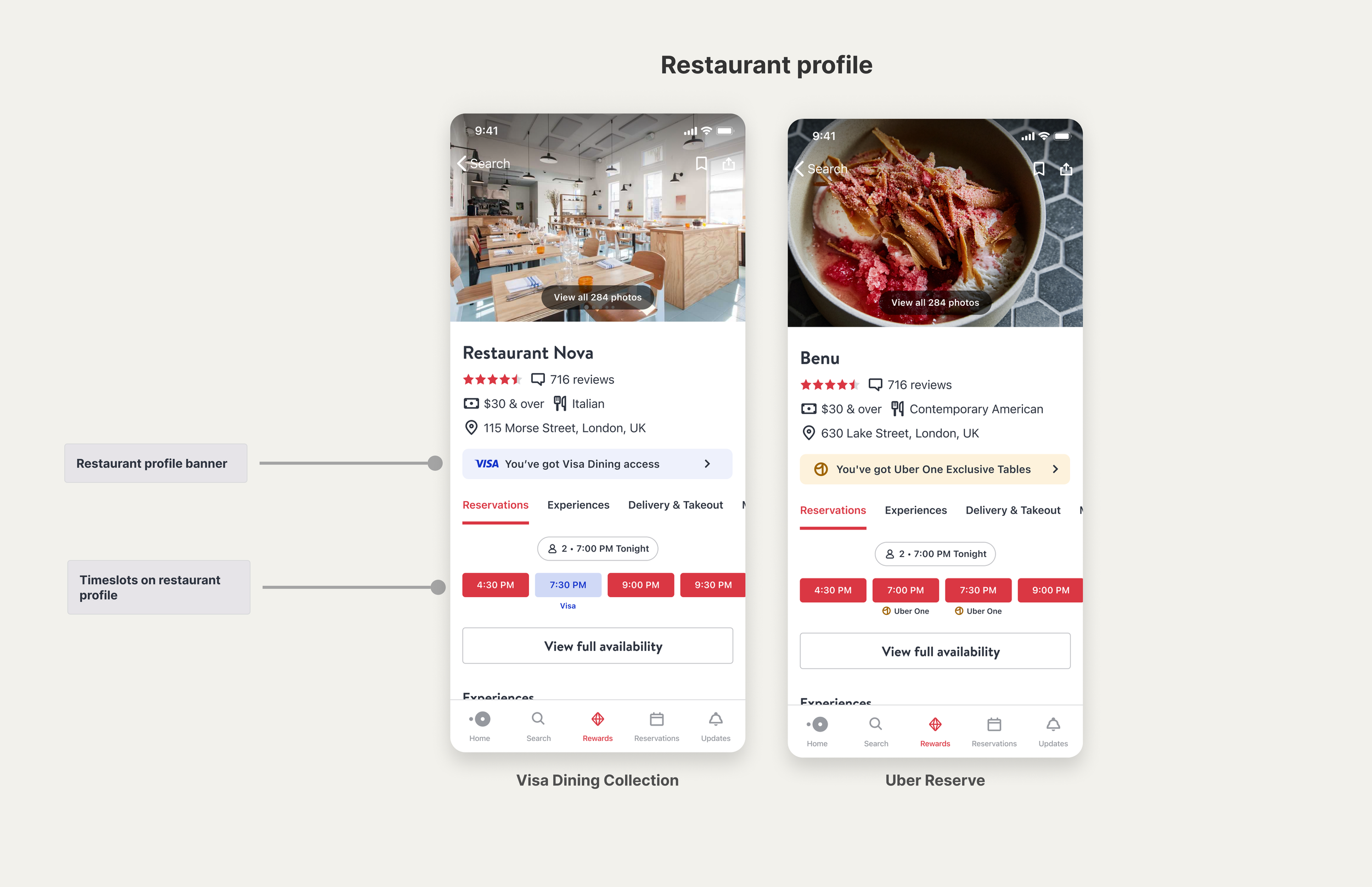
Rather than designing a Visa-specific experience, I established reusable partnership patterns—including placement, messaging, and visual treatments—that could flex across future partnerships while maintaining a consistent customer experience.
Outcome
Created a scalable framework that supported multiple partnership programs without reinventing the experience for each launch.
Creating a launch moment
Design decision #3
Problem
Existing surfaces weren't sufficient to introduce a completely new partnership experience.
Decision
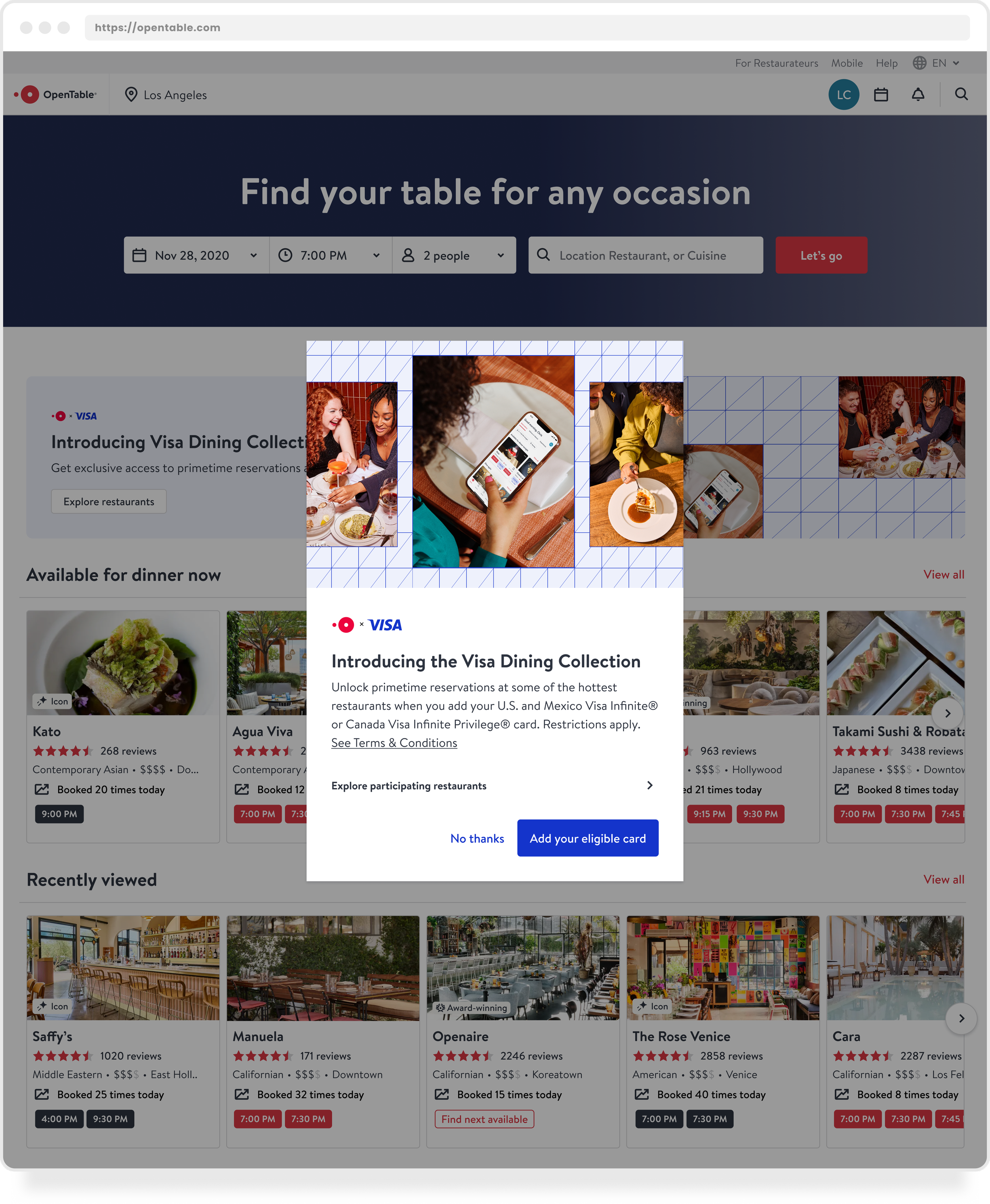
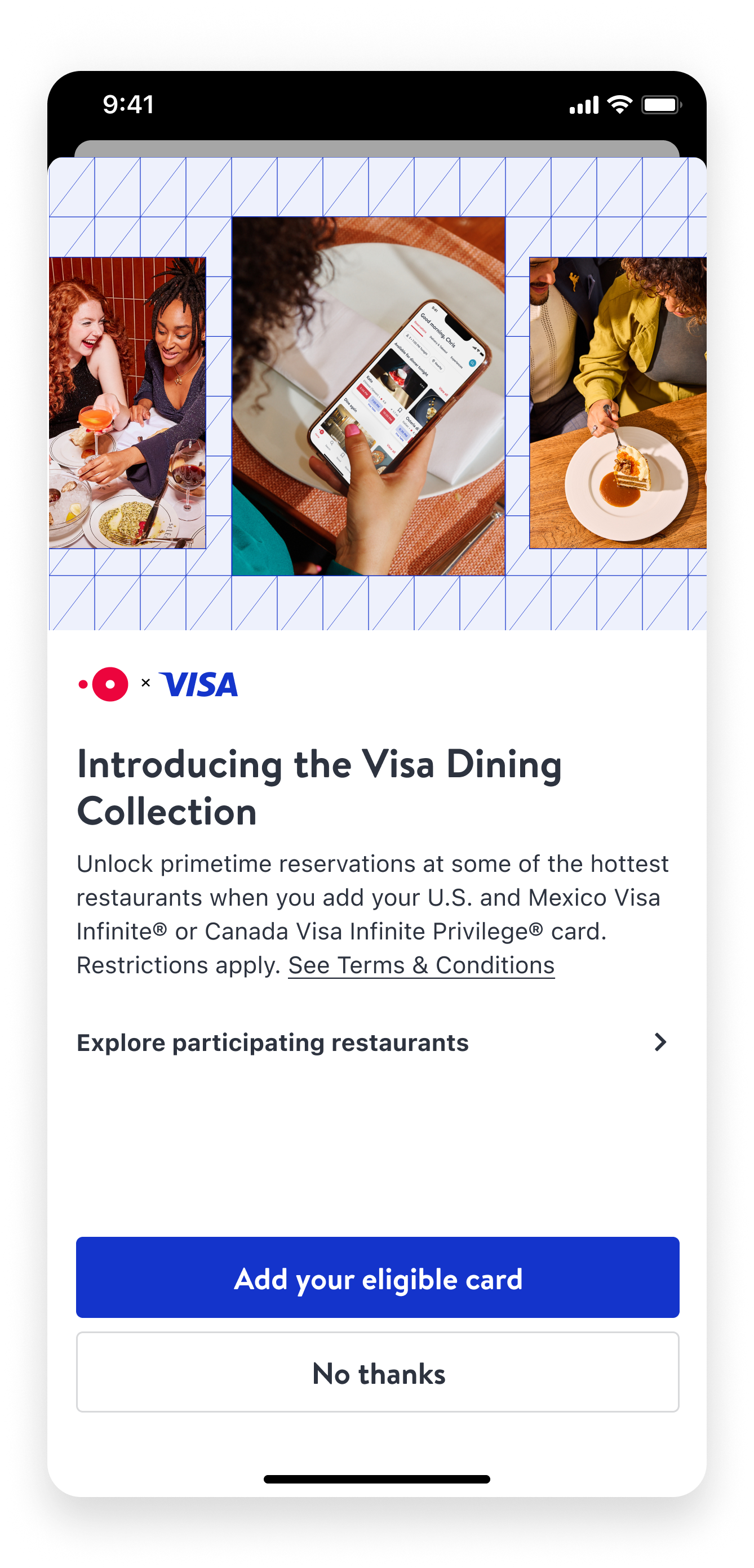
Rather than relying on banners alone, I introduced a one-time takeover modal to create a dedicated onboarding moment. This gave diners the context they needed before encountering Visa-exclusive experiences elsewhere in the product.
Outcome
Successfully introduced a new interaction pattern that balanced business visibility with a respectful user experience, setting the foundation for future high-profile launches.
Impact
OpenTable's largest partnership became the blueprint for future partnership experiences across the platform.
$23 million
Investment supporting restaurant acquisition.
240,000+
verified Visa diners.
109,000+
unique Visa Table bookings.
Reflection
Building systems, not features
Designing Visa wasn't about one launch—it created the foundation for future partnerships.
Design for the majority
Optimizing only for eligible diners would have created frustration for everyone else.
Business constraints can improve UX
Designing around exclusivity forced us to create clearer communication patterns that improved trust.
The biggest lesson I took away from this project was that the most valuable design work isn't always the feature you launch—it's the systems and principles that make future work faster, more consistent, and easier to scale.